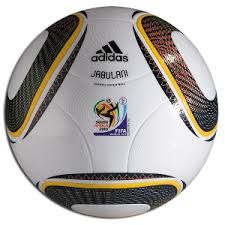
It is thirty minutes from kick-off in the opening game of the 1962 World Cup in Chile as the English referee Kenneth Aston heads into the tunnel in search of the balls that are to be used during the match. He begins to grow concerned when his request is met by panicked faces from the organisers, but is told everything will be fine. At 15:08, eight minutes later than scheduled, Chile kickoff against Switzerland with a ball hurriedly sourced from inside the stadium.
The three official match balls originally earmarked for the fixture are inside the home of the Aquiles Caceres, head of the organising committee in Santiago where the first game is taking place. In his rush to get to the stadium on time and ensure everything is in order he has forgotten the most important element, and now as the match gets underway, Police officer Eduardo Gordon is speeding towards the Caceres residence, sirens blaring, to retrieve the forgotten balls.
39 minutes into the first half, Gordon finally arrives pitchside, red faced and panting, but nevertheless clutching the all important match ball. Aston comes to the touchline, swaps out the rouge ball for the official one and play resumes… for all of four minutes. The official ball is losing air and has to be replaced by another. The watching FIFA officials are far from impressed.
The balls for that World Cup were all produced by a local company named Crack, continuing the tradition from previous tournaments whereby the host nation was in charge of sourcing the match balls, usually choosing a domestic supplier. The embarrassment caused by the deflation issues in the opening game, along with complaints from other nations at that and preceding World Cups that locally produced balls unfairly favoured the host nation, led FIFA to seek out a sole supplier that could produce balls on a consistent basis for future World Cups.
England had already been named as hosts for the 1966 World Cup at this point and had decided on Derbyshire based Slazenger as their supplier following a blind quality test with balls sourced from various manufacturers. FIFA allowed that agreement to proceed as promised, giving rise to the iconic amber ball with which England won their first, and to date only, World Cup.
FIFA’s search for a permanent supplier was in full swing by this point and as a test run they gave Adidas the license to produce balls for retail baring the World Cup name. The German company had only started producing footballs in 1963, but already boasted impressive research facilities. This, coupled with strong sales of the retail balls, convinced FIFA to hire them to produce the official match balls for the 1970 World Cup in Mexico.
Although colour televisions were beginning to gain some traction in the market by the late sixties, the majority of those who would be watching the 1970 World Cup in the comfort of their living room would be doing so on black and white televisions. This prompted Adidas to do away with the one-colour balls that had graced previous World Cups and opt for a black and white panelled ball that could be easily distinguished from the turf. Thus the Telstar – “Star of Television” – was born.
The Telstar was the first World Cup ball to use the Buckminster design, named after the forward thinking American architect Richard Buckminster Fuller, who stumbled across the design in his search for a way to construct buildings using the bare minimum of materials. In defiance of the 18 panel balls that had been the mainstay of previous World Cups, the Telstar was a 32 panel design, made up of 12 black pentagons and 20 white hexagons.
FIFA were pleased with the performance of the Telstar and entered into a long-term agreement with Adidas for future World Cups. The same design was used for the 1974 World Cup in Germany, before Adidas switched to a 20 panel design for the 1978 tournament in Argentina, a design that would remain the basis for the balls used in the next five World Cups.
From 2002 onwards the design of the ball has altered significantly with each tournament, both internally and externally, with ball technology advancing at such a pace that it would nowadays be unthinkable for the same design principle to remain the standard for twenty-odd years as it has done so in the past.
In the run up to this World Cup there have been the usual complaints from goalkeepers that the new ball is too unpredictable – Brazil goalkeeper Julio Cesar has even described it as being “like one of those balls you buy in the supermarket” – but that seems trivial compared to the problems faced before FIFA partnered with a standard supplier. This summer the conditions will be the same for everyone. And you can be sure that the balls will be ready and waiting for kickoff.